Writing problems
Some parts of the story rush while others drag
You move through one passage quickly but feel held in another much longer than its work seems to require. The contrast may disrupt the rhythm you want across the book.
How PlotDirector can help
Timeline · story values
Compare the shape of recorded scene values with the chapter and scene sequence.
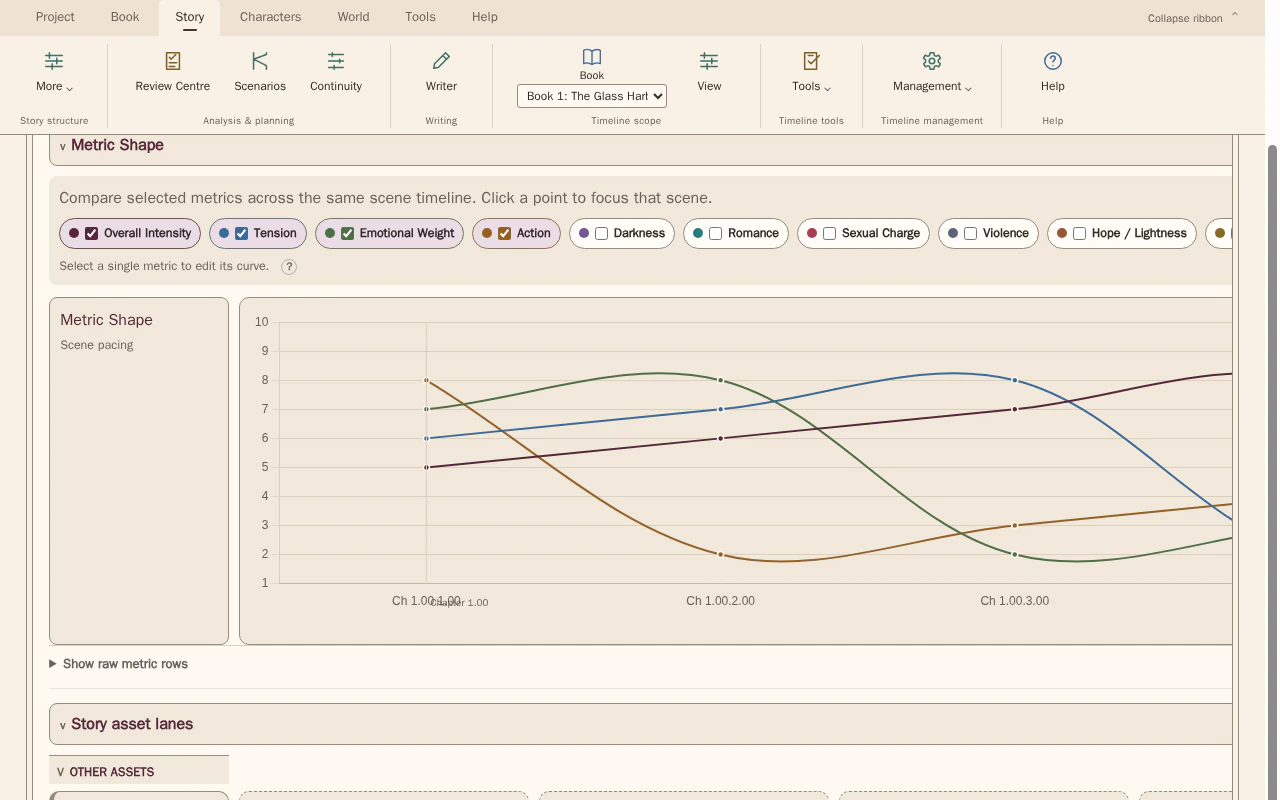
With scene values recorded, compare their shape across the manuscript. The graph gives you a pattern to inspect; the creative judgement remains yours.
Look for Changes packed together between long waits, then the scenes that create those transitions.
See how Timeline · story values worksExplore the tool without signing in.
Why this happens
Reading pace depends on scene length, density, explanation, pauses and the kinds of change being processed. Deliberate variation gives a book rhythm; uniform speed is not the aim.
A fast passage may summarise events while a slow one explores a single decision. The contrast becomes a concern when it undermines the attention or emphasis you intend.
What to look for
- Compare passages doing similar amounts of story work
- Locate stretches of repeated explanation or compressed turning points
- Check transitions between fast and reflective sequences