Writing problems
You're not sure whether a reveal comes too early or too late
The explanation is prepared and understandable, but its position may drain anticipation or prolong uncertainty beyond the effect you want. The issue is how the reading experience changes around it.
How PlotDirector can help
Start here
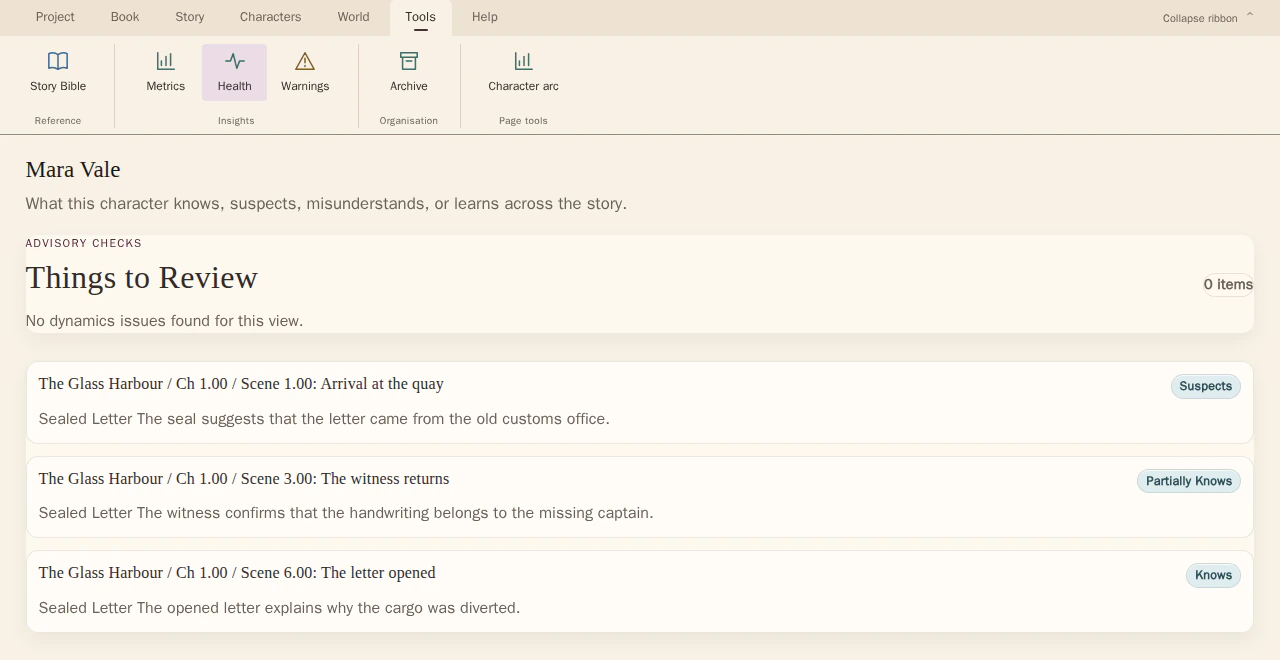
Character knowledge timeline
Use the linked discovery scenes as reference points, then compare what the prose reveals around them.
Choose a character and follow their recorded learning, suspicion and misunderstanding through linked scenes.
Look for Preparation before the reveal, the intended moment of understanding and scenes that give away or withhold too much.
See how Character knowledge timeline worksExplore the tool without signing in.
Why this happens
A reveal changes the questions available to the reader. Delaying it can sustain curiosity, but may also postpone the consequences that make the next part of the story interesting.
An early answer can create a stronger new uncertainty; a late answer can leave too little room for its consequences. Compare what the reveal enables as well as what it resolves.
What to look for
- Compare the live questions before and after the reveal
- Check what delay adds beyond withholding an answer
- Try the effect of moving its consequences as well as its explanation