Writing problems
There are too many clues and discoveries to keep straight
You remember the solution but not which clues have appeared, who noticed them or which leads remain unresolved. A reread becomes an attempt to rebuild your investigation notes.
How PlotDirector can help
Start here
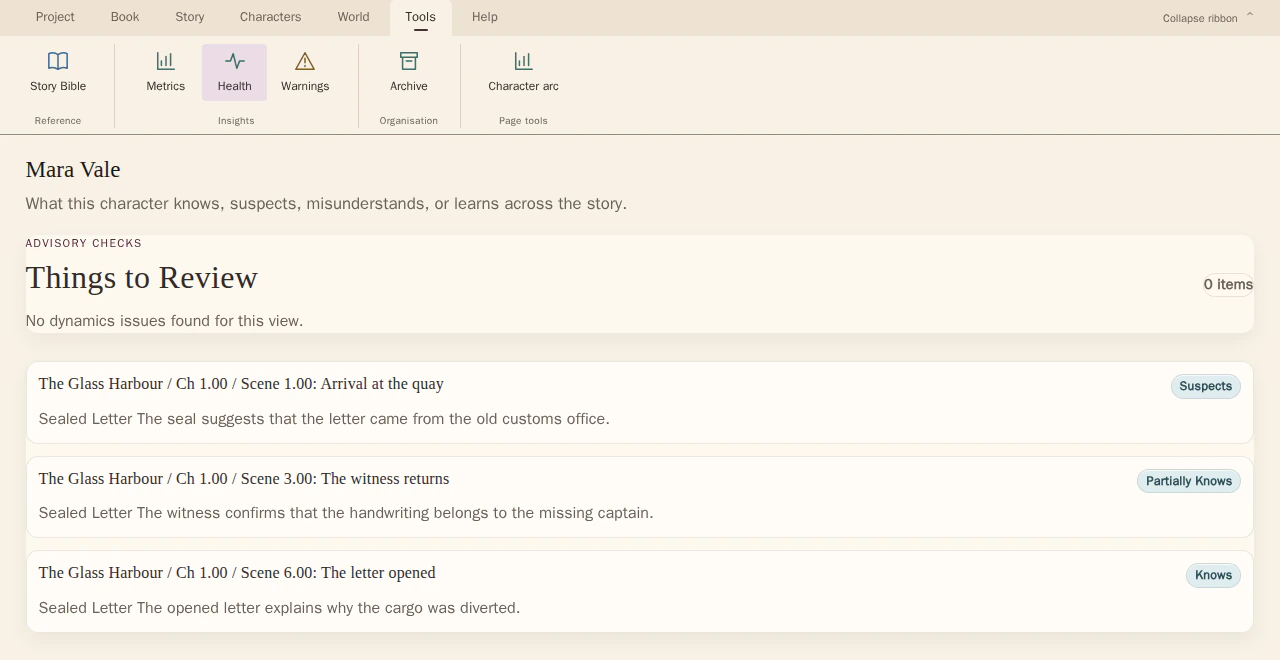
Character knowledge timeline
Follow the recorded knowledge events for the character investigating the trail.
Choose a character and follow their recorded learning, suspicion and misunderstanding through linked scenes.
Look for Clues already encountered, changes in interpretation and discoveries that never reach the people relying on them.
See how Character knowledge timeline worksExplore the tool without signing in.
Why this happens
Clues can function as objects, observations, interpretations and later corrections. Tracking only the final answer loses the changing meaning of the evidence along the way.
The same clue may support an early mistaken theory and a later explanation. Retaining both interpretations helps you inspect the investigation without judging the early scene by the final answer alone.
What to look for
- Record each clue's first appearance and observers
- Link interpretations to the evidence available then
- Mark leads that are resolved, transformed or deliberately left open