Writing problems
Too much development is packed into the ending
Late chapters must carry several shifts in belief, loyalty or understanding at once. The destination may be clear while the earlier manuscript offers too little experience to support it.
How PlotDirector can help
Timeline · story values
Use recorded development values and scene positions to inspect the lead-in to the ending.
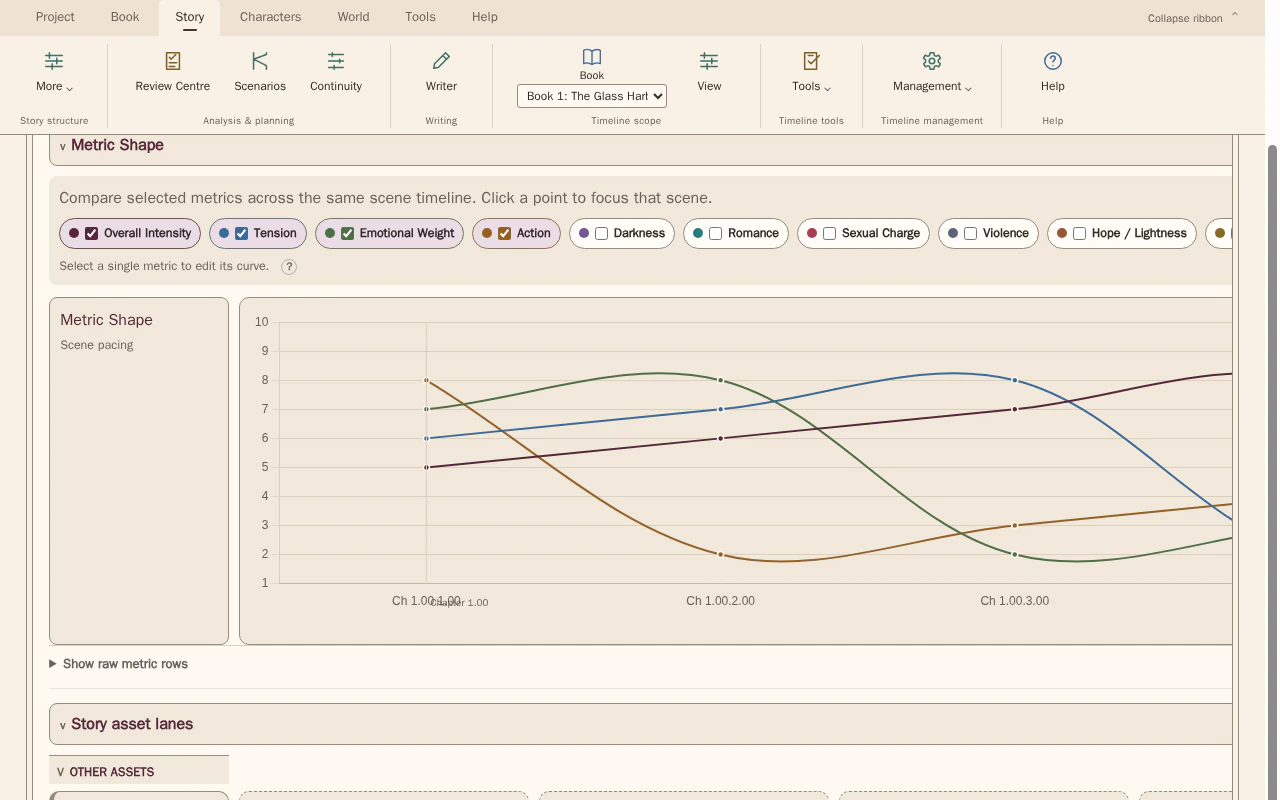
With scene values recorded, compare their shape across the manuscript. The graph gives you a pattern to inspect; the creative judgement remains yours.
Look for Early preparation, development left waiting and the cluster of changes in the closing section.
See how Timeline · story values worksExplore the tool without signing in.
Why this happens
An ending can rightly concentrate consequences. It feels compressed when necessary development has been postponed, especially if revision strengthened the final turn without revisiting its preparation.
The ending may reveal a change that has been happening quietly for chapters. Check for those earlier traces before moving the final decision or adding explanatory scenes near the climax.
What to look for
- List the changes the ending asks the reader to accept
- Locate earlier experiences supporting each one
- Separate a late revelation of change from change that only happens late